 Tri-Level HandymanCall 817-970-4065
Soft spot in the floor? A Mansfield, TX guide
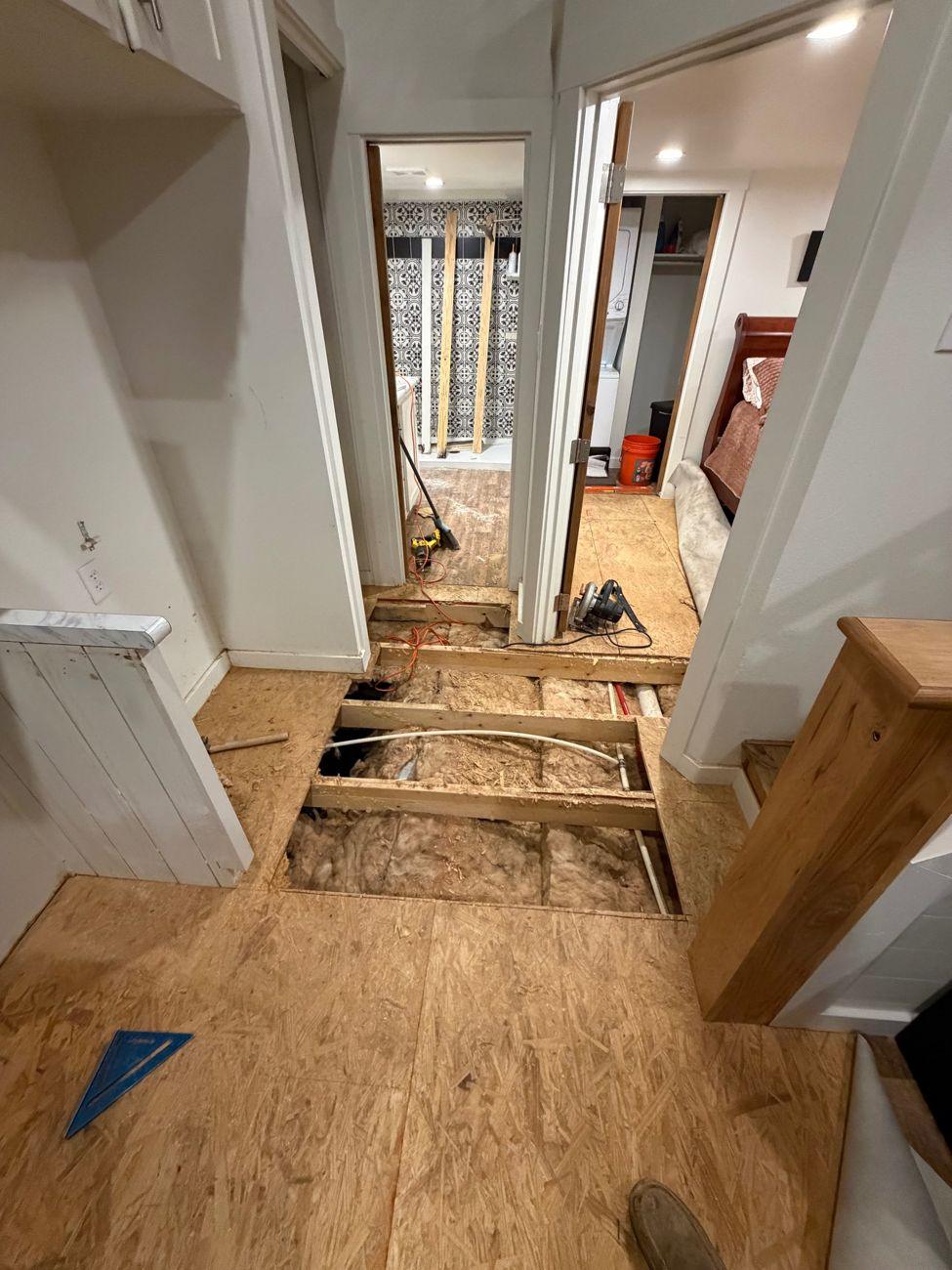
A soft or bouncy spot in a floor usually means the subfloor (the plywood or OSB panel under your finished floor) or the framing under it has been damaged, most often by water. A lasting repair replaces the damaged wood and stops the water source. New flooring laid on top doesn't fix it.
What a subfloor is
Most wood-framed floors have three layers: the finished floor you walk on (vinyl, laminate, tile or wood), a structural panel called the subfloor (plywood or oriented strand board, OSB), and the framing underneath (joists). The subfloor spreads your weight across the joists. When it weakens, the floor flexes between joists and feels soft.
Why subfloors fail
Water is the usual cause. Wood stays strong when it’s dry, but wood-decay fungi grow when wood stays wet. Researchers at the USDA Forest Products Laboratory report that for most decay fungi the best conditions are moisture contents above the fiber saturation point, usually around 25 to 30 percent, with ideal temperatures of about 21 to 32 °C (70 to 90 °F). They also report that wood wetted only briefly and then dried does not decay. Indoor floors in Texas homes sit in that temperature range year-round, so a leak that keeps the wood wet for weeks or months is what causes rot.
OSB panels can also swell when they absorb water. Weyerhaeuser, a major OSB manufacturer, notes that panel edges absorb moisture more easily and that the amount of swelling depends on how much water and for how long.
Warning signs
- A spot that feels soft, spongy or bouncy when you step on it
- Flooring lifting, bubbling or separating near a tub, shower, toilet, dishwasher or washing machine
- A toilet that rocks
- Cracked caulk or grout where a shower or tub meets the floor
- Stains, swelling or a musty smell at baseboards or cabinet bottoms
When to call
Call before the spot gets bigger. A small soft area caught early is usually a small, local repair. Left alone while water keeps getting in, the damage spreads along the subfloor and into the framing, and the repair grows with it.
Permits in Mansfield
The City of Mansfield says a permit is required for any construction, alteration or repair of any structure, and that remodeling work involving any structural change requires a permit. Floor framing repair can fall under that. If you’re unsure, the city asks you to contact the Building Safety Department at 817-276-4220 or permits@mansfieldtexas.gov. More on Mansfield permits.
Common questions
Is a soft spot in the floor dangerous?
It means the floor has lost stiffness, usually because the subfloor or framing is damaged. It should be checked before it gets larger, especially in bathrooms where water may still be getting in.
Can I just put new flooring over a soft spot?
New flooring doesn't restore the strength of damaged subfloor. If the wood underneath is rotted or still wet, the soft spot remains and the damage can keep spreading.
What causes a soft floor near a toilet or shower?
Most often a slow leak, such as a failed seal at the base of a toilet or water getting behind a shower wall, keeps the subfloor wet long enough for decay fungi to grow.
Do you repair soft floors outside Mansfield?
Yes. Tri-Level is based in Mansfield, TX and also works in Arlington, Kennedale, Grand Prairie, Burleson, Midlothian, Venus, Crowley, Cedar Hill, Waxahachie and south Fort Worth.
Want Garrett to look at it?
Tri-Level Handyman Services is based in Mansfield, TX 76063. Free written estimates. Text a photo of the problem and you’ll get a straight answer.
Call 817-970-4065Text Garrett a photoMore repair guides
Sources
- USDA Forest Products Laboratory: Decay of wood and wood-based products above ground in buildings (Carll and Highley)
- Weyerhaeuser: OSB Subfloor Panel Edge Sanding
- City of Mansfield, TX: Permits and Registration
- City of Mansfield, TX: Building Safety FAQs
- Texas State Board of Plumbing Examiners: Plumbing License Law